

Introduction: The Untold Story of African Innovation
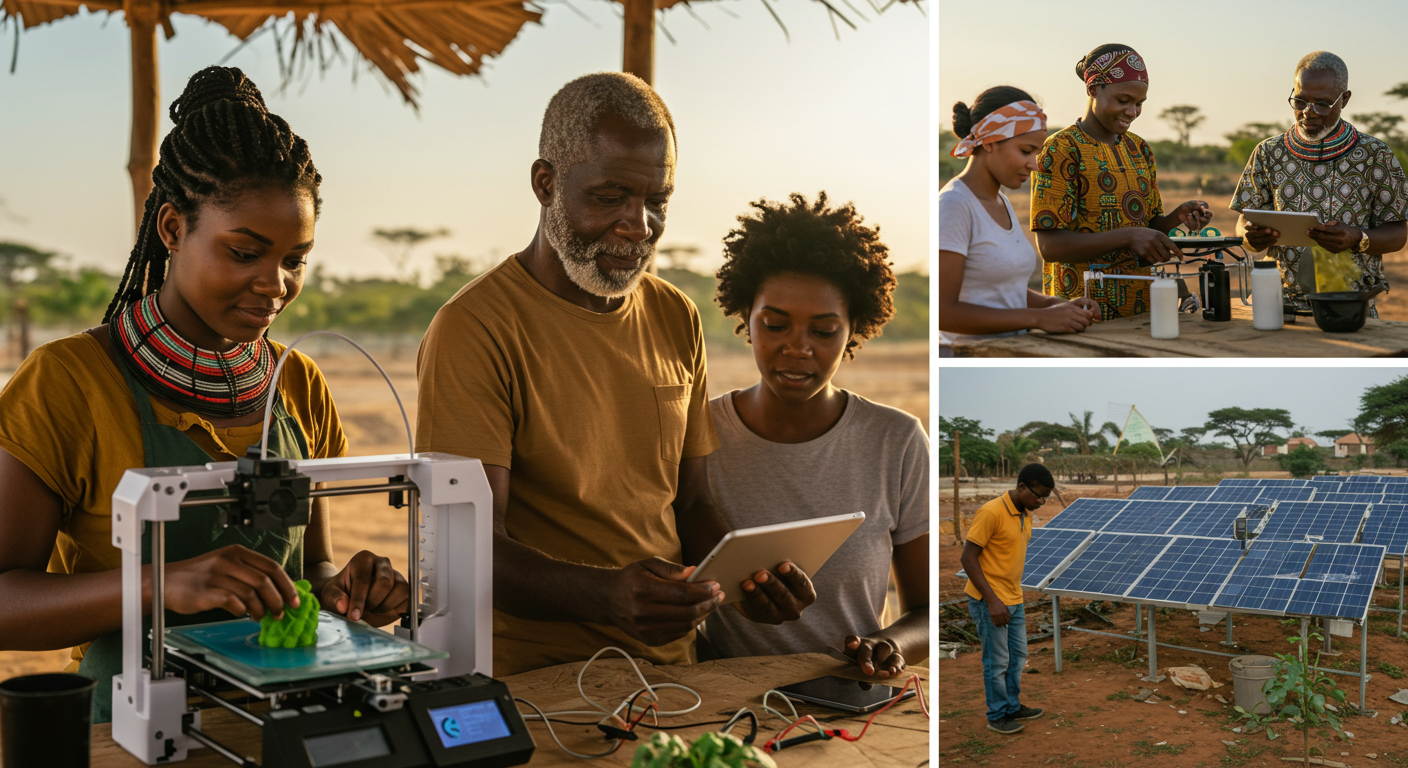
In 2025, while the world’s attention remains fixated on Silicon Valley and European tech hubs, a quiet revolution is unfolding across Africa. From the bustling markets of Nairobi to the research laboratories of Cape Town, African inventors are creating breakthrough technologies that promise to transform not just their local communities, but the entire global landscape. These innovations represent more than technological advancement—they embody a fundamental shift in how we understand creativity, resourcefulness, and the true meaning of innovation. Africa breakthrough technologies
The story of Africa’s 2025 inventions challenges long-held assumptions about where groundbreaking technology originates. Rather than emerging from well-funded corporate research centers, these life-changing innovations are born from necessity, nurtured by ingenuity, and powered by an unwavering determination to solve real-world problems with limited resources.
Kenya’s Mind-Controlled Prosthetics: Turning Electronic Waste Into Medical Miracles
The Innovation That’s Changing Lives
In Kenya, a group of self-taught inventors has achieved what many well-funded medical device companies struggle to accomplish: creating affordable, mind-controlled prosthetic limbs using recycled electronic waste. This groundbreaking technology represents a convergence of environmental sustainability and medical innovation that could revolutionize healthcare accessibility across the developing world.
The process begins with what others might consider garbage—discarded smartphones, old computers, and broken circuit boards that typically end up in landfills. These Kenyan innovators have developed techniques to extract and repurpose the electronic components, transforming them into sophisticated neural interfaces that can interpret brain signals and translate them into precise mechanical movements. Africa breakthrough technologies
The Technology Behind the Breakthrough
The mind-controlled prosthetics work by detecting electrical signals from the user’s muscles and residual neural pathways. Advanced algorithms, developed locally and optimized for the available hardware, process these signals in real-time to control the prosthetic limb’s movements. What makes this particularly remarkable is that the entire system costs a fraction of similar technologies developed in Western countries, making it accessible to communities that previously had no hope of affording such medical devices.
The environmental impact of this innovation cannot be overstated. By repurposing electronic waste that would otherwise contribute to Africa’s growing e-waste problem, these inventors have created a circular economy model that other countries are now studying and attempting to replicate.
South Africa’s HIV Breakthrough: A Potential Cure That Could Change Everything
Medical Research That Offers Hope
South African researchers have announced what could be the most significant medical breakthrough of the decade: a potential cure for HIV. After years of rigorous testing and clinical trials, their treatment approach has shown unprecedented success rates in eliminating the virus from patients’ systems.
The research, conducted at leading South African medical institutions, builds upon decades of HIV research while incorporating novel therapeutic approaches that specifically target the virus’s ability to hide in cellular reservoirs. This breakthrough is particularly significant given that sub-Saharan Africa has been disproportionately affected by the HIV epidemic, with millions of people living with the virus across the region.
The Global Implications
If confirmed through additional trials, this HIV cure could fundamentally transform global health outcomes. The treatment protocol, designed to be manufacturable and distributable in resource-limited settings, could finally make HIV elimination a realistic global health goal rather than a distant dream.
International health organizations are closely monitoring the progress of these trials, with many experts suggesting that this breakthrough could represent the beginning of the end for one of humanity’s most persistent health challenges.
Congo’s Self-Powered Generator: Revolutionizing Energy Access
Engineering Innovation Born from Necessity
In the Democratic Republic of Congo, where millions lack access to reliable electricity, local engineers have developed a self-powered generator that operates without traditional fuel sources. This innovation addresses one of Africa’s most pressing challenges: energy poverty, which affects rural communities and limits economic development across the continent.
The generator utilizes a combination of renewable energy capture systems and advanced energy storage technologies to provide continuous power. What sets this innovation apart is its ability to function independently of external fuel supplies, making it ideal for remote locations where traditional power infrastructure is either unavailable or unreliable.
The Potential for Global Impact
The implications of this technology extend far beyond Congo’s borders. Rural communities across Africa, Asia, and Latin America could benefit from this solution, which promises to democratize access to electricity and enable economic development in previously underserved regions.
The generator’s design philosophy emphasizes simplicity and maintainability, ensuring that local technicians can service and repair the systems without requiring specialized training or expensive replacement parts. This approach to innovation—prioritizing accessibility and local capacity building—represents a fundamentally different philosophy from traditional technology development. Africa breakthrough technologies
Zimbabwe’s AI Educational Tools: Making Learning Inclusive and Interactive
Customized Learning for Local Contexts
Young innovators in Zimbabwe have developed AI-integrated educational tools that are specifically customized for local languages and curricula. This breakthrough addresses a critical gap in educational technology, where most existing solutions are designed for Western contexts and fail to serve the diverse linguistic and cultural needs of African students.
The AI systems can adapt to individual learning styles while delivering content in local languages, making education more accessible and engaging for students who might otherwise struggle with foreign-language instruction. The tools incorporate traditional knowledge systems and cultural contexts, creating a more holistic educational experience that respects and builds upon local wisdom.
Transforming Educational Outcomes
Early implementations of these AI educational tools have shown remarkable improvements in student engagement and learning outcomes. Teachers report that students are more actively participating in lessons and demonstrating better comprehension of complex concepts when learning in their native languages with culturally relevant examples.
The success of these tools is inspiring educational technology developers worldwide to reconsider their approaches to learning software design, particularly regarding language inclusivity and cultural sensitivity.
The Broader Implications: Africa as a Global Innovation Hub
Redefining Innovation Narratives
These 2025 innovations from Africa challenge fundamental assumptions about where breakthrough technologies originate. Rather than requiring massive financial investments and sophisticated laboratory facilities, these inventions demonstrate that innovation thrives when brilliant minds are motivated by urgent problems and empowered by resourcefulness. Africa breakthrough technologies
The success of these African innovations suggests that the global innovation ecosystem is far more diverse and distributed than previously understood. This recognition is leading to increased investment in African research and development, as international organizations and investors recognize the continent’s potential to generate world-changing technologies.
The Role of Resourcefulness in Innovation
Perhaps most importantly, these African innovations demonstrate that resourcefulness and necessity can be more powerful drivers of innovation than abundant funding. The ability to create sophisticated medical devices from electronic waste, develop breakthrough treatments with limited resources, and engineer novel solutions to persistent problems represents a fundamentally different approach to innovation that the global technology community is beginning to recognize and emulate.
Challenges and Opportunities
Scaling and Global Implementation
While these innovations represent remarkable achievements, scaling them to reach global markets presents significant challenges. Issues including regulatory approval, manufacturing capacity, and distribution infrastructure must be addressed to ensure these breakthroughs can benefit communities worldwide.
However, the increasing international attention and investment flowing toward African innovation suggests that these challenges are not insurmountable. Partnership opportunities with global technology companies, international development organizations, and research institutions are creating pathways for these innovations to reach broader audiences.
Supporting Future Innovation
The success of these 2025 innovations highlights the importance of supporting African research and development infrastructure. Continued investment in education, research facilities, and innovation ecosystems will be crucial for ensuring that Africa continues to contribute breakthrough technologies to global challenges.
Conclusion: A New Chapter in Global Innovation
Africa’s revolutionary inventions of 2025 represent more than technological achievements—they signal a fundamental shift in the global innovation landscape. These breakthroughs demonstrate that innovation is not confined to traditional tech hubs but can emerge from any corner of the world where brilliant minds are motivated by urgent problems and empowered by determination.
As we move forward, the global community must recognize and support Africa’s growing role as an innovation hub. The continent’s unique combination of pressing challenges, abundant talent, and resourceful problem-solving approaches positions it to continue generating breakthrough technologies that benefit not just African communities, but the entire world.
The innovations emerging from Kenya, South Africa, Congo, and Zimbabwe in 2025 are just the beginning. As more resources flow toward African research and development, and as global recognition of the continent’s innovation potential grows, we can expect to see even more groundbreaking technologies emerging from African inventors and researchers.
The future of global innovation is not just being written in Silicon Valley or Boston—it’s being crafted in Nairobi, Cape Town, Kinshasa, and Harare. And perhaps most importantly, it’s being driven by a fundamentally different philosophy of innovation: one that prioritizes accessibility, sustainability, and real-world impact over profit margins and market dominance.https://youtu.be/W_hQj5mkvaI?si=0isB7rzUSnLE3ywg




Leave a Reply